ENERGY PERFORMANCE CERTIFICATE AND SEASONAL RENTALS IN THE MOUNTAINS: WHAT DO YOU NEED TO KNOW ?
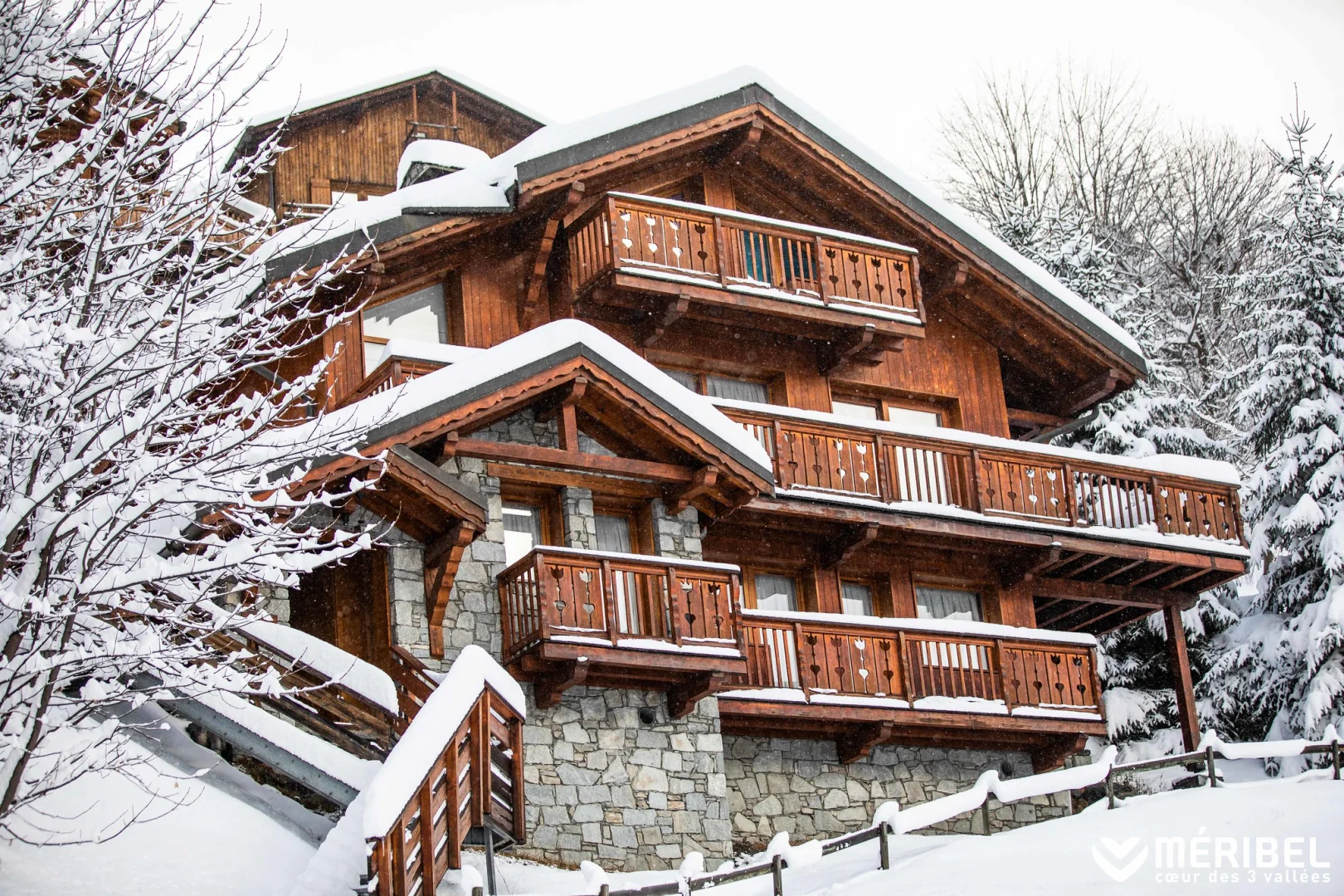
Do you own a flat in a ski resort and rent it out on a weekly basis?
The Energy Performance Certificate (EPC) is becoming a key consideration when planning for the future of your holiday let.
The Le Meur Act of 19 November 2024 has tightened the requirements for furnished holiday accommodation, with a timetable that differs from that for long-term lettings.
In mainland France, new applications for permission to change the use of a property to furnished holiday accommodation require an EPC rated from A to E.
From 1 January 2034, holiday let properties that are not the landlord’s main residence must achieve a rating of A, B, C or D. There is no general deadline in 2028 for holiday let properties already in operation. [1]
In Méribel and other resorts, renovation also helps to improve comfort and keep heating costs under control. The Saulire agency offers an overview to help you understand your obligations and plan for the work ahead.
This article, in brief:
- The minimum Class E requirement applies to new permits for a change of use; it does not automatically apply to the very first time a property is let.
- The target for 2034 is a minimum energy efficiency class of D for the properties concerned, excluding the landlord’s main residence.
- Since January 2026, the electricity conversion factor has been reduced, which improves the calculated energy performance of properties using this energy source.
- Energy Efficiency Certificates (CEEs) can fund certain works on second homes. Other forms of financial assistance depend heavily on the property’s use and the structure of the co-ownership scheme.
Energy Performance Certificates (EPCs) and holiday lettings in mountain resorts: why is this topic becoming increasingly important?
Older buildings, poorly insulated walls and a cold climate can increase heating requirements. A well-planned renovation therefore serves two purposes: improving occupants’ comfort and anticipating regulatory requirements.
Figures from the FNAIM confirm the scale of the issue. In its study published on 18 December 2025, 28 per cent of homes in ski resort municipalities are classified as F or G. Including class E, nearly two-thirds of the housing stock is affected.
In the 71 main Alpine resorts analysed, nearly 75 per cent of homes are rated E, F or G. These figures predate the January 2026 reform: they do not represent an assessment of the housing stock following recalculation. [2]
Since 1 January 2026, the conversion factor for electricity to primary energy has fallen from 2.3 to 1.9.
For properties with identical characteristics, the proportion of electricity in conventional energy consumption, expressed in terms of primary energy, has fallen by approximately 17.4 per cent. Some homes previously classified as F or G may therefore achieve a better energy rating – in some cases E or better – depending on their location and emissions levels. [3]
However, this change in calculation alone has not reduced actual energy consumption. The Ministry had estimated that around 850,000 main residences could be reclassified as no longer being ‘energy-inefficient’; this is a preliminary national estimate, not a result observed at individual properties. To find out the actual effect on your flat, check its Energy Performance Certificate (EPC) or its updated energy performance statement. [3]
Key considerations for you as a mountain property owner:
- Check the insulation of walls, floors and roofs depending on the apartment’s orientation.
- Examine the heating and hot water systems.
- Identify windows and airtightness issues.
- Meet holidaymakers’ expectations regarding thermal comfort.
Is the Energy Performance Certificate (EPC) calculated differently in mountainous areas?
The national method is the same, but it takes the property’s location into account. The standard calculation takes into account, in particular, the climate zone, altitude, the building’s characteristics and its fittings and fixtures. It is not based solely on your utility bills or the number of weeks the property was actually let. [4]
Certain thresholds are adjusted for properties situated above 800 metres in the relevant climate zones. Smaller properties have also benefited from specific thresholds since July 2024. The assessor must use the regulatory parameters applicable to your property.
There is therefore no general exemption from the EPC requirement for flats in holiday resorts. [4]
Is an EPC compulsory for holiday lettings in holiday resorts?
Prior to the Le Meur Act, the energy performance certificate was not systematically required for holiday lettings. The current obligations depend, in particular, on authorisation for a change of use and the deadlines set out in the law.
The decisive factor today is a new application for a change of use, where such authorisation is required locally. The owner must then submit an EPC rated between A and E. The ministerial response to question no. 5598 specifies that this requirement does not call into question authorisations already issued. [1]
| Deadline | Requirement |
Properties concerned / location |
| Since the Act of November 2024 came into force, applicable from 2025 | Energy Performance Certificate (EPC) grades A to E, i.e. at least grade E | New applications for authorisation to change the use of property in mainland France |
| 1 January 2026 – deadline passed | Electricity tariff reduced from 2.3 to 1.9; no new tourism threshold as yet | New Energy Performance Certificates (EPCs) and updates to eligible previous EPCs |
| 20 May 2026 – statutory deadline passed | Registration to be made compulsory by law; no new energy performance certificate (EPC) category | The DGE has announced that the national online service will be launched in the fourth quarter of 2026 |
| 1 January 2034 | Energy Performance Certificate (EPC) grades A to D, i.e. grade D or higher | Relevant holiday lettings (other than the landlord’s main residence); new authorisations for change of use: A to D |
Sources: Ministerial reply No. 5598, the Le Meur Act, the Ministry responsible for housing and the DGE. [1, 3, 5]
Which properties are subject to the energy performance certificate (EPC) requirement?
A second home let on a seasonal basis must be assessed in accordance with local rules on declaration, registration and change of use. A declaration of a furnished letting and authorisation for a change of use are two separate procedures.
The 120-day limit – which may be reduced to 90 days by local council resolution – applies to the holiday letting of a main residence. This is not a general threshold triggering the energy performance certificate (EPC) requirement for a second home. The exemption of the landlord’s main residence from the 2034 holiday letting requirements stems from its status, and not simply from the duration of the let. [6]
Do you already have a valid EPC issued since July 2021? The certificate available on ADEME’s EPC-Audit Observatory allows you to find out the new energy label based on the 2026 electricity coefficient. It retains the expiry date of the original EPC. [3]
Please feel free to discuss this with your estate agent if you are considering a purchase in Méribel.
What penalties apply in the event of non-compliance?
Penalties vary depending on the offence and the date they come into force. The EPC fine of €5,000 per property and the daily penalty of €100 are governed by Article L. 324-2-2 of the Tourism Code, introduced by Article 3 of the Le Meur Act. This provision comes into force on 1 January 2034. [7]
|
Type of offence |
Maximum penalty provided for |
Reference and application |
| Renting or continuing to rent despite energy performance standards not being met | €5,000 per premises | Article L. 324-2-2; from 2034 |
| Failure to submit the Energy Performance Certificate requested by the mayor, after the two-month deadline | A penalty of €100 per day | Article L. 324-2-2; from 2034 |
| Failure to comply with the applicable declaration subject to registration | 10 000 € | Article L. 324-1-1(V); in accordance with the applicable provisions |
| False statement in these proceedings or incorrect number | 20 000 € | Article L. 324-1-1(V); not to be confused with an automatic energy performance certificate (DPE) fine |
The rules governing changes of use carry their own penalties. [6, 7]
How will platforms monitor property listings in 2026?
As at 30 September 2026, it would be inaccurate to present the national online service as already operational everywhere. The DGE has announced that it will launch in the fourth quarter of 2026. In the meantime, local procedures remain in force; where a local authority number is mandatory, it must be included in the listings. [5]
Intermediaries collect the landlord’s regulatory declarations and the number where required. The ‘API meublés’ organises the transmission of activity data to local authorities. The national scheme is set to strengthen number verification and the scope for removing listings, with a transition period for existing numbers. These checks do not constitute a systematic technical validation of the Energy Performance Certificate (DPE) by Airbnb or Abritel.
[5, 6]
How do you carry out an Energy Performance Certificate (EPC) for a holiday let in the mountains?
Engage a certified and insured assessor to visit the property. Their certification is issued by an accredited body; it is therefore more accurate to refer to them as a ‘certified assessor’ rather than a ‘COFRAC-certified assessor’. Check their status in the official register of property assessors. [4]
The report must be submitted to ADEME and include an identification number. In a block of flats, the collective Energy Performance Certificate provides useful information but does not automatically replace the individual Energy Performance Certificate for each flat. The standard validity period is ten years; older certificates issued before July 2021 will no longer be valid in 2026. [4]
What information and documents should you prepare?
Compare several quotes and check that they include the site visit, the report and its submission to ADEME. Choose a professional with experience of blocks of flats and the types of installations found in mountainous areas.
Authorised professionals and best practice
All assessors mustbe listed in ADEME’s official register, which is available free of charge online.
Submitting the EPC to the ADEME observatory is not optional: it is a legal requirement that determines the document’s validity. Also check for COFRAC certification.
Be wary of unusually low prices or assessments carried out remotely without a site visit, as a botched EPC could be contested by a tenant or invalidated during an inspection… To protect yourself from such practices, we strongly recommend that you obtain several estimates and compare the different quotes.
How much does an EPC cost in a ski resort?
For a flat, you should budget for around €150 to €300, to be confirmed by a local quote. There is no regulated rate or verified average for 2026 specific to Méribel or Courchevel.
| Property type | Indicative budget range for requesting quotes |
| Studio | 200€ to 300€ |
| Two-bedroom | 300€ to 450€ |
| Three-bedroom | 450€ to 550€ |
| Five-bedroom flats | 550€ to 650€ |
| Chalets or holiday complexes | personalised quote |
These ranges are estimates to help you plan your budget; they are not a survey of actual prices charged in the resorts. Please check the VAT, travel costs and the scope of the service.
How can you improve the energy performance certificate (EPC) of your property in the mountains? Renovation work and energy-optimisation strategies
Better energy performance contributes to comfort and helps keep running costs under control. However, the sequence of works must be tailored to each flat. A top-floor flat, a corner flat and a flat surrounded by heated premises do not experience the same heat loss.
Before you begin, an energy audit allows you to compare different scenarios and their estimated savings. Aiming for energy class D or better helps prepare for 2034; a class E, F or G rating calls for an analysis of the necessary work, though this does not mean a general ban on tourist accommodation from 2028.
Insulation: THE top priority for mountain homes
In its guide ‘Insulating your home’, ADEME gives figures for an uninsulated house of 25 to 30 per cent of heat loss through the roof and 20 to 25 per cent through the walls, amounting to 45 to 55 per cent in total for these two areas. An example of 30 per cent plus 20 per cent does indeed give 50 per cent, without including the floors. These figures are not applicable to every holiday apartment. [8]
External insulation addresses many discontinuities in the building envelope, but requires a collective decision and, in some cases, planning permission. Internal insulation may be suitable for certain private walls; it reduces the available floor space and requires particular attention to be paid to damp and ventilation.
Indicative comparison of insulation materials — for thermal resistance close to R = 4 m²·K/W, the theoretical thickness is calculated as e = R × λ:
| Insulation material | Indicative lambda value, W/(m·K) | Theoretical thickness for R = 4 | Indicative material-only cost per m² |
| High-performance glass wool | 0.032 | 12.8 cm | 12€ to 25€ |
| Rock wool | 0.035 | 14 cm | 18€ to 35€ |
| Polyurethane panels | 0.022 | 8.8 cm | 25€ to 60€ |
| Loose-fill cellulose wadding | 0.039 to 0.041 depending on installation | 15.6 to 16.4 cm | 10€ to €25 |
Lambda values: examples of products from ISOVER, ROCKWOOL, SOPREMA and Biofib. [9] Prices: budget estimates, excluding installation, finishes, membrane, framework, delivery and adaptations for mountainous areas; these are not guaranteed prices. The panels actually available and any settling of loose-fill material must be factored into the calculations. Applications vary: not all materials are interchangeable.
The choice must also take into account moisture behaviour, fire safety, acoustic performance and the existing substrate. Proper installation is just as important as the material itself.
Heating and hot water systems: what solutions are available at high altitudes?
Size the equipment to suit the actual climate. A heat pump is not ruled out in principle in mountainous areas: its capacity and efficiency at low temperatures, defrosting mechanism, supplementary heating requirements and installation constraints must be checked.
Control systems, programming and hot water production also warrant careful consideration. Replacing a convector heater with a newer electric radiator can improve comfort, though it does not guarantee a significant improvement in the Energy Performance Certificate (EPC) rating. No single change of equipment can universally guarantee a two-class improvement in the EPC rating.
Windows and ventilation: make sure you minimise heat loss!
Consider high-performance double glazing, suitable window frames, night-time insulation and a ventilation system consistent with the insulation project. Triple glazing may be justified depending on the building’s orientation and technical constraints.
In a block of flats, decisions to replace windows or install a ventilation system cannot always be made unilaterally: check the regulations, the communal areas, the external appearance and the necessary authorisations.
What energy-efficiency renovation grants are available for holiday lettings in mountain areas?
For a second home let on a weekly basis, Energy Efficiency Certificates (CEEs) are a key option. The MaPrimeRénov’ Individual scheme is reserved for properties occupied as a main residence. The MaPrimeRénov’ Co-ownership scheme may be available to mixed-use co-ownership properties, but requires a minimum proportion of main residences: buildings used primarily for tourist accommodation are therefore often excluded. Local and regional grants are assessed on a case-by-case basis. [10, 11]
| Financial assistance | Second homes / holiday lets | Amount or conditions in 2026 |
| MaPrimeRénov’ (individual) | Not available for a property used as a second home or for seasonal letting | No funding available in this situation |
| MaPrimeRénov’ for Co-ownership | Possible via an eligible co-ownership scheme | 30 per cent for an energy saving of at least 35 per cent; 45 per cent for a saving of at least 50 per cent; expenditure capped at €25,000 per property, i.e. a base amount of €7,500 or €11,250 before bonuses |
| CEE | Yes, depending on the works and conditions | Grant varies according to the project, the area and the offer; property generally completed more than two years ago; approval must be obtained before work commences |
| Individual or co-ownership Éco-PTZ | Not available to finance a property that remains a second home or seasonal residence | Up to €50,000 under certain eligible schemes for a main residence; ceiling not applicable to your second home |
| Auvergne-Rhône-Alpes Region : support for tourist accommodation | Depending on the establishment’s category and the project; no automatic entitlement for a stand-alone flat. | The amount of aid and the ceiling are determined by the scheme’s regulations; prior approval from the Region is required |
| Auvergne-Rhône-Alpes Region: tourism development | Depending on the eligibility of the project leader and the project. | Feasibility or opportunity studies; details to be confirmed with the Region |
| Municipal, inter-municipal or departmental grants | Depending on the area and intended use | No standard amount; check with France Rénov’ and local authorities |
Sources: Anah 2026 guide, Service Public and Auvergne-Rhône-Alpes Tourisme. [12–14]
For MaPrimeRénov’ Co-ownership, the threshold is 75 per cent of the units or, failing that, of the shares allocated to the main residence, reduced to 65 per cent for co-ownership blocks with twenty dwellings or fewer. The property registration must be up to date and project management assistance is compulsory. A vote in favour of the works is therefore not sufficient to make a tourist property eligible. [12]
In Auvergne-Rhône-Alpes, check which scheme corresponds exactly to your project before planning to apply for a grant. It would be misleading to claim that automatic regional aid of between €1,000 and €5,000 is available for every second home.
Before signing any quotes, have the conditions for the grants and any eligibility for multiple grants checked. The property manager and a France Rénov’ adviser can help you draw up the financing plan.
The impact of the Energy Performance Certificate (EPC) on the profitability and tax implications of short-let accommodation
Improving insulation and temperature control can reduce running costs – which are often borne by the owner – and enhance guests’ comfort. However, the effect on profitability depends on the cost of the work, energy consumption, occupancy rates and financing.
There is no verified data to suggest that a flat rated D consistently rents for 15 to 20 per cent more than one rated F. Location, capacity, the condition of the property and its amenities remain key factors.
For the 2026 tax return relating to 2025 income, the tax authorities specify a micro-BIC allowance of 50 per cent for classified holiday lettings and 30 per cent for unclassified ones, with respective ceilings of €77,700 and €15,000. The star rating for tourist accommodation is distinct from the energy performance certificate (DPE) class. [14]
Under the micro-BIC scheme, actual expenses are not deducted separately from the allowance. Under the actual income scheme, certain expenses may be deducted and certain improvements must be capitalised and depreciated: the treatment depends on their nature. Consulting your accountant will enable you to compare the options.
For a holiday apartment, take three steps now: update your energy performance certificate, identify necessary works and check the available funding. The Saulire agency can assist you in planning your rental or sale project in Méribel and Courchevel La Tania.
Sources and reference points
- National Assembly — ministerial response to question no. 5598.
- FNAIM — study on ski resorts, 18 December 2025.
- Ministry — changes to the electricity coefficient and certificates.
- Ministry — energy performance certificate and methodological guidelines.
- DGE — API for furnished properties and timetable for the national online service.
- Act No. 2024-1039 of 19 November 2024 — Articles 1 and 4.
- Le Meur Act — Article 3: energy thresholds and penalties.
- ADEME — ‘Insulating your home’ guide, heat loss benchmarks for an uninsulated house. The benchmarks depend on the building; the updated ADEME page presents a different breakdown for houses built before 1974.
- Technical data sheets: ISOVER GR32, ROCKWOOL Rockmur, SOPREMA polyurethane, Biofib wadding.
- Anah — 2026 guide to financial assistance.
- Public Service — Energy Performance Certificate (CEE).
- Public Service — eco-PTZ for co-owned properties.
- Auvergne-Rhône-Alpes Tourism — regional grants, updated 18 March 2026.
- Taxes — tax regime for furnished holiday lets, 2026 tax return.
