Investing in the Mountains: Everything you need to know to make the right choice in 2026
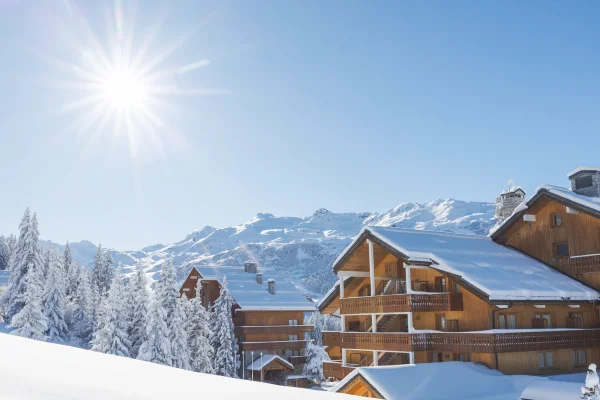
Yes, investing in mountain property can be profitable, with a gross return of 4 to 8 per cent depending on the resort.
Buying a flat or chalet in the Alps is a dream for many investors. Between Méribel, Courchevel and the 3 Vallées ski area, the mountain property market is showing remarkable vitality.
Prices are rising, rental demand remains strong, and the prospect of capital gains appeals to those keen on tangible assets.
However, making a successful investment in a ski resort requires much more than simply falling in love with the slopes.
Whether it’s a second home to enjoy yourself, a pure rental investment or a combination of both, every project has its own constraints. Location, property type, tax implications and remote management all affect the final return on investment.
Mistakes are costly, and the right choices require careful planning in advance.
In this guide, we’ve brought together the key factors for investing with confidence: real assets, returns by resort, tax schemes and pitfalls to avoid. A concise, figures-based guide, accessible to novices and seasoned investors alike.
Why invest in the mountains? Motivation, uses and specific advantages
Buying a property in the mountains is rarely driven by a single motivation.
Some are primarily looking for a holiday home – a second home where they can reunite with family every winter and enjoy the great outdoors between ski runs. Others are aiming for a pure wealth-building investment, with regular rental income and the prospect of capital gains on resale.
Between these two approaches, a third option is attracting an increasing number of buyers: combining personal use with rental profitability, by occupying the property for a few weeks a year and letting it out the rest of the time.
This is the case with our new-build development, BARMA.
The appeal of the mountain setting obviously plays a major role in this trend. The unspoilt natural environment, the panoramic views of snow-capped peaks and the prestige of certain resorts such as Méribel and Courchevel attract a loyal French and international clientele, year after year.
Moreover, this tourist appeal is no longer limited to winter: hiking, mountain biking, wellness and summer festivals are gradually spreading demand across the year and extending the period of occupancy for these properties.
Furthermore, building plots are becoming increasingly scarce in the major Alpine resorts. This scarcity of land underpins prices and fuels long-term appreciation potential that is hard to find elsewhere.
At a time when financial markets remain volatile and inflation is eroding traditional savings, mountain property offers reassurance to investors seeking stability. It represents a tangible, visible asset that can be lived in, let out or passed on to loved ones.
In other words, investing at altitude combines pleasure, heritage and return on investment.
Mountain property is no longer just a winter investment
For a long time, the profitability of properties in ski resorts depended almost exclusively on the ski season.
Today, most major Alpine resorts are developing a genuine four-season tourism industry.
Hiking, mountain biking, trail running, golf, wellness, sporting events, festivals and even remote working breaks now generate additional income during the summer.
Average occupancy rates observed
| Season | Occupancy rate |
| Winter | 75–95% |
| Summer | 40–70 per cent |
| Shoulder season | 10–30% |
In some Alpine resorts, up to 30–35 per cent of annual rental income can now be generated during the summer season.
This trend reduces dependence on snowfall and improves the overall profitability of investments.
Checklist: things to check before buying
Before signing a preliminary sales agreement, check the following:
✅ Resort situated at an altitude of over 1,500 metres
✅ Extensive ski area
✅ Immediate proximity to the ski lifts
✅ Private parking space
✅ Ski locker
✅ Balcony or terrace
✅ South or west-facing
✅ Unobstructed view
✅ Good internet connection
✅ Wide range of summer activities
✅ Reasonable service charges
✅ Year-round rental potential
What do you need to know to make a successful investment in the mountains?
Investing in a mountain property isn’t something you can wing. Several factors determine the long-term profitability and value of your property. Two of these deserve particular attention: the location and the type of property you choose.
Location and accessibility
The majority of tenants are primarily looking for immediate proximity to the slopes and the resort centre. A ski-in/ski-out flat rents out more quickly, commands a higher rent and experiences fewer rental vacancies than a property further out. This difference is also reflected when it comes to resale: the best-located properties retain a higher value over the years.
Beyond the location within the resort, the choice of resort itself is a key factor:
- International reputation versus a family-friendly atmosphere
- High altitude versus mid-mountain
- Natural snow cover versus reliance on artificial snow
You should also analyse the local market positioning, as some resorts attract a high-end clientele, whilst others appeal more to families or groups of friends.
Access to the resort is also important. Smooth year-round access – whether by road, proximity to a TGV station or an efficient shuttle bus network – reassures holidaymakers and broadens your customer base. Finally, assess the potential for off-season occupancy: resorts with leisure facilities, summer events or outdoor activities generate income over a longer period.
Choosing the right type of property
The choice between a chalet, a flat or a studio depends on local rental demand and your objectives. In terms of gross yield, smaller properties (studios, one-bedroom flats) often yield higher returns than large family chalets. However, demand for larger flats is growing steadily.
The quality of construction and the general condition of the property directly influence maintenance and management requirements. In terms of amenities, unobstructed views, a balcony or terrace, a ski room, parking and communal areas add perceived value for tenants and justify higher rents.
Profitability of a rental investment in the mountains: what are the prospects?
The profitability of a property in a ski resort depends on several factors: location, the chosen rental model and your ability to maximise the occupancy rate.
Gross yields generally range from 4 per cent to a maximum of 10 per cent, depending on the specific circumstances.
Be aware, however, of specific risks: reliance on snowfall can affect certain seasons, rental vacancies during the off-season eat into income, and managing the property remotely makes day-to-day monitoring more difficult.
Holiday lettings: should you opt for short-term or long-term lets?
The choice of rental model directly affects your profits and your day-to-day involvement:
|
Criterion |
Short-term |
Long-term |
|
Return |
High daily rental rates |
More modest income |
|
Flexibility |
Suitable for personal use |
Permanently occupied |
|
Management |
Complex (cleaning, reception) |
Simplified |
|
Running costs |
High (consumables, staff turnover) |
Lower |
|
Stability |
Varies depending on the season |
Consistent revenue |
Seasonality also has a significant impact on occupancy rates:
|
Period |
Average occupancy |
Rent level |
|
High season |
70% to 95% |
Maximum rates |
|
Mid-season |
50% to 70% |
Intermediate rates |
|
Low season |
10% to 30% |
Reduced rates |
A property let only in winter generates income over 12 to 16 weeks, whereas a four-season resort spreads its revenue throughout the year.
Calculating rental profitability in the mountains: how to set your rent?
Average returns vary significantly depending on the resort. Here are some indicative figures for standard properties:
- Méribel: 3% to 5% gross
- Courchevel: 2% to 4% gross
- Chamonix: 4% to 6% gross
- Les Menuires: 4.5% to 6.5% gross
Several factors influence gross and net returns:
- Purchase price and solicitor’s fees
- Number of weeks let per year
- Service charges and maintenance costs
- Rental management fees (15% to 25%)
- Taxation depending on the chosen scheme
Three options to help you get a clear picture:
- The gross yield is calculated as follows: (annual rent / purchase price) × 100.
- The net return includes service charges: ((rental income − service charges − management fees) / purchase price) × 100.
- Finally, the net return after tax takes taxation into account, which varies depending on your tax status.
Include all costs in your projections: service charges, council tax, tourist tax, non-occupier’s insurance, etc. Set your rent by analysing the rates charged for similar properties in the same area. A rent that is too high leads to vacancies, whilst a rent that is too low erodes your profit margin. Tax optimisation, detailed in the following section, then refines your actual return.
What are the tax implications for rental investments in mountain resorts?
The tax treatment of a rental property in a resort depends on the chosen status and the method of operation. There are three main options: the LMNP (Non-Professional Furnished Letting), the LMP (Professional Furnished Letting) and unfurnished letting.
For the vast majority of investors in mountain resorts, the LMNP remains the most suitable status. It allows you to let a furnished property whilst benefiting from favourable tax treatment and relatively flexible management.
The LMNP tax regimes
Depending on the amount of income and the nature of the property, two tax regimes may apply:
| Criteria | Micro-BIC | Actual income scheme |
|---|---|---|
| Income threshold | Depending on the tax regulations in force and the nature of the property | Optional or where revenue exceeds the thresholds |
| Tax deduction | Flat-rate allowance | Deduction of actual expenses + depreciation |
| Accounting | Simplified | Full accounting |
| Suitable profile | Investors looking for simplicity | Investors wishing to optimise their tax position |
Under the actual income regime, you can deduct expenses (loan interest, insurance, management fees, eligible renovation costs, etc.) and claim depreciation on both the property and its fixtures and fittings. In many cases, this mechanism significantly reduces, or even temporarily eliminates, tax on rental income.
Recent developments in furnished holiday accommodation
The rules governing furnished holiday accommodation have undergone significant changes in recent years following the Le Meur Act and various Finance Acts.
The main changes concern:
- a reduction in tax benefits for certain unclassified holiday let properties;
- stricter reporting requirements;
- the introduction of registration procedures in many local authorities;
- the ability for local authorities to regulate holiday rentals more effectively.
In this context, it is strongly recommended that you regularly check the rules applicable in the local authority where the property is situated, as these may change rapidly.
Tourist accommodation and VAT recovery
In certain cases, purchasing a property in a tourist residence offering hotel-style services may allow you to reclaim VAT on the purchase price.
However, this scheme is subject to several conditions, particularly regarding the duration of operation and compliance with the applicable tax framework. Seeking guidance from a specialist is strongly advised before proceeding with any transaction.
Which tax regime should you choose?
The choice between the micro-BIC scheme and the actual income scheme depends mainly on:
- the amount of rental income;
- the level of expenses incurred;
- whether or not there is a mortgage;
- the intended holding period;
- your overall financial situation.
For the majority of mortgage-financed rental investments in mountain areas, the LMNP ‘réel’ scheme often remains the most tax-efficient option.
Please note: the regulations governing furnished holiday rentals are subject to regular changes. Before making any investment, it is advisable to consult a chartered accountant or tax adviser to ensure your strategy is in line with the legislation in force at the time of purchase.
Where to invest in the mountains: a focus on the most attractive resorts
Choosing the right resort is key to ensuring the profitability and long-term viability of your investment. Here is an overview of the main options, with some indicative figures:
|
Resort |
Average price per m² |
Gross return |
Comments |
|
Val d’Isère |
€14,000 to €20,000 |
2% to 4% |
High service charges, expensive owners’ associations |
|
Courchevel 1850 |
€18,000 to €30,000 |
2% to 4% |
Ultra-premium |
|
Méribel |
€11,000 to €18,000 |
3% to 5% |
International demand |
|
Chamonix |
€8,000 to €13,000 |
4% to 6% |
Steady winter and summer activity |
|
Les Menuires |
€6,500 to €9,000 |
5% to 8% |
Family-friendly resort |
Mountain property market 2026
Market trends 2025–2026
| Indicator | Average value |
|---|---|
| Price rise in premium resorts since 2020 | +25 to +40 per cent |
| Winter occupancy rate | 70 to 95 per cent |
| Summer occupancy rate | 35 to 70 per cent |
| Average gross yield in mountain resorts | 4–8 per cent |
| Gross yield for urban property | 2.5 to 5 per cent |
| Average holding period | 12 to 15 years |
Méribel: an exceptional market with strong potential
Méribel commands high prices, but rental demand there is particularly strong. Its appeal stems from its international clientele, high-end facilities and direct access to the 3 Vallées ski area. The market has demonstrated its resilience even during times of crisis. The prospects for capital appreciation are attracting wealth management investors.
Discover our property listings in Méribel.
Courchevel: a resort that needs no introduction
Courchevel epitomises the pinnacle of Alpine luxury, with prices per square metre regularly exceeding €20,000. Rental demand is driven by a wealthy clientele from all over the world. This market has weathered crises without faltering, making it a safe haven for wealth preservation.
Explore the properties available on our Courchevel property page.
Alternative high-yield resorts
Investors seeking higher – albeit less secure – returns are turning to dynamic resorts:
- Châtel: access to the Portes du Soleil, family-friendly atmosphere
- Morzine: a lively resort in both summer and winter
- Les Gets: authentic charm, loyal clientele
- La Clusaz: close to Annecy, good transport links
- Saint-Gervais: attractive prices, links to Megève
These destinations offer affordable purchase prices, with gross returns sometimes exceeding 6% to 8%. Their potential for development and their ability to attract visitors in summer further enhance their appeal.
What are the pitfalls and mistakes to avoid when investing in a mountain resort?
Investing in a ski resort can hold a few unpleasant surprises for those who dive in unprepared. Here are the most common mistakes to avoid:
- Underestimating maintenance and refurbishment costs: winter wear and tear, harsh weather conditions and managing the property remotely all drive up the bill. Facade renovations, roofing work and bringing properties up to standard in the mountains cost more than in the lowlands.
- Overestimating off-season rental demand: resorts that aren’t versatile struggle to attract tenants outside the winter season. It’s best to analyse the summer potential before buying.
- Betting on a small resort without researching actual demand: road access, reputation and infrastructure all influence occupancy rates. A resort with poor transport links or one that is little known generates fewer bookings.
- Overlooking the impact of rental vacancies in the off-season: periods outside school holidays and the end of the season weigh on annual profitability.
- Overlooking regulatory constraints: rental quotas in certain local authorities, restrictive owners’ association rules, and changing tax regulations. These factors must be checked in advance.
- Miscalculating the return: all charges and taxes (co-ownership fees, property tax, tourist tax, management fees, etc.) must be included in the calculation.
- Failing to prepare your financing properly: banks assess the profitability of seasonal rentals with caution. A substantial deposit and a well-prepared application make it easier to secure a loan.
How can you effectively let and manage your mountain property?
Once the purchase is finalised, the question of management soon arises. There are three options to consider: managing the property yourself, entrusting it to a local agency, or signing a commercial lease with a holiday accommodation operator.
Managing the property yourself maximises your income, but it requires time and availability. Entrusting it to an agency frees you from day-to-day responsibilities, in return for a commission on the rent. A commercial lease with an operator (such as Pierre & Vacances or MGM) guarantees a fixed income, but reduces your flexibility for personal use.
Booking platforms (Airbnb, Booking, Abritel) boost your visibility and occupancy rates. They enable you to reach an international clientele, provided you take care with your listings: high-quality photos, detailed descriptions and rates adjusted to seasonal demand.
On the logistics side, several ancillary services need to be planned for:
- Cleaning between each booking
- Provision and launderying of linen
- Welcoming guests and handing over the keys
- Technical maintenance and minor repairs
Remotely, digital tools make it easier to track bookings and communicate with guests. However, a reliable local partner, based on site, remains essential in the event of an emergency.
Finally, the quality of your welcome and services builds tenant loyalty. A satisfied traveller will return, recommend your property and leave positive reviews. This virtuous cycle boosts your profitability year after year.
Do you own a flat in Méribel-Mottaret? Discover our dedicated support for property owners.
Entrust us with the management of your property with complete peace of mind
FAQ: everything you need to know about investing in the mountains
How can you finance your mountain property purchase?
A standard mortgage works, provided you stay within the 35% debt-to-income ratio. Banks usually require a deposit of 10–20% and assess projected rental income with caution. A strong application and solid guarantees make it easier to secure a loan.
Can you rent out your property all year round in the mountains?
Yes, if the resort offers summer activities such as hiking, mountain biking and wellness facilities. The major resorts in the Alps attract visitors in the summer. However, smaller single-ski resorts struggle to fill their accommodation outside the peak season. Assess the all-year-round potential before buying.
What additional costs should you expect apart from the purchase price?
Allow for notary fees (generally 7–8 per cent for second-hand properties / 2–3 per cent for new-builds), service charges, council tax, non-occupier’s insurance, and maintenance costs. Add tourist tax if you let the property, as well as any rental management fees.
Will the tax rules for furnished holiday lets change again?
The Le Meur Act has tightened the rules for 2025: reduced tax allowances and lower thresholds. Further adjustments are possible in the coming years. Keep up to date with tax news and consult a chartered accountant to adapt your strategy at the right time.
When is the best time to buy a property in the mountains?
A property can be sold at any time! As soon as you’ve made your decision, you should contact the estate agent to draw up the sales mandate and start gathering the documents for the sales file.
It is recommended that you put your property on the market around one to two months before the start of a new tourist season, to allow time to market it and gather all the necessary information to answer any questions potential buyers are likely to have.
Can you benefit from tax relief schemes in holiday resorts?
The LMNP (Non-Professional Furnished Letting) scheme works very well in mountain resorts thanks to the depreciation of the property and its furnishings. The Pinel scheme ended in 2024. The LMP scheme is aimed at investors whose rental income exceeds €23,000 per year.
How can you manage rental vacancies during the off-season?
Offer attractive rates at the start and end of the season. Target seasonal workers, remote workers or autumn hikers. Diversify your marketing channels and tailor your adverts to each period. A versatile resort naturally minimises the number of empty weeks.
What are the main factors that increase the value of a property in the mountains?
Proximity to the slopes, a south-facing aspect, unobstructed views and the quality of the interior fittings drive up prices. A balcony, a ski locker and a parking space add value. The condition of the block of flats also matters.
Is it still a good idea to invest despite climate change?
High-altitude resorts (above 1,800 m) and large interconnected ski areas continue to enjoy reliable snow cover. Méribel, Courchevel and Val Thorens benefit from solid infrastructure and a loyal clientele. Opt for resorts that offer a variety of activities all year round.
What budget should you set aside for investing in the mountains?
The budget will obviously depend on what you’re looking for. You should expect to pay at least €200,000 for a studio flat, €300,000 to €400,000 for a one-bedroom flat, and over €500,000 for larger properties.
These prices vary depending on the floor area, the condition of the property, its aspect and its location.
